
The "Distance Tax": Why Visa Consolidation is a Barrier to Youth Potential
For millions of young Africans, the visa application process is an invisible wall—a gamble of savings, time, and potential. Now, that wall is getting higher. The U.S. government’s proposal to consolidate visa processing into regional hubs isn’t just "logistics", it’s a "distance tax" on merit. When a policy that looks efficient on paper creates a financial burden that separates the talented from the opportunities they have spent years preparing for, we have to ask: Efficiency for whom?
Adeife Adeyeye
7/3/20262 min read
The Policy Literacy Gap
At the African Diaspora Youth Hub, we believe that policy literacy is a form of power. We cannot afford to be passive observers. Understanding these systems is the first step toward changing them.
While governments argue these consolidations strengthen security and reduce administrative costs, they often overlook the ripple effects on students, entrepreneurs, and researchers. When transparency and access are sidelined, it is our responsibility to demand accountability.
Why This Matters
A visa interview in a neighboring country is not simply an "inconvenience." It requires purchasing flights, securing accommodation, obtaining transit permissions, and absorbing costs that many applicants are already struggling to afford.
This isn't just a political issue; it is a question of fairness. When opportunities are concentrated in specific locations, those living farther away face disadvantages that have nothing to do with their academic or professional qualifications and everything to do with circumstance.
Your Story Matters
Policy isn't made in a vacuum. If you are impacted by these changes—or if you have observed how these shifts change educational or career trajectories—we want to hear from you.
We are aggregating these narratives to ensure our collective voice is heard in the rooms that matter.
Document your experience and share how these shifts impact your access to global opportunities. Send your story to the Hub at connect@adyhub.org and let's ensure our collective voice is heard.
Sources
Reporting from the Associated Press, Reuters, Newsweek, and the U.S. Department of State.
https://www.newsweek.com/us-visa-update-embassies-africa-consulates-immigration-ebola-12018444
https://apnews.com/article/trump-africa-visas-embassies-cutbacks-973e4458cc0770a0a7e83acf51e74df0
https://www.euronews.com/2026/06/02/us-to-slash-number-of-embassies-in-africa-processing-visas
https://travel.state.gov/content/travel/en/News/visas-news/temporary-pause-of-visa-operations.html
For millions of young Africans, the visa application process is an invisible wall—a gamble of savings, time, and potential. Now, that wall is getting higher. The U.S. government’s proposal to consolidate visa processing into regional hubs isn’t just "logistics", it’s a "distance tax" on merit.
The Reality Behind the "Efficiency" Label
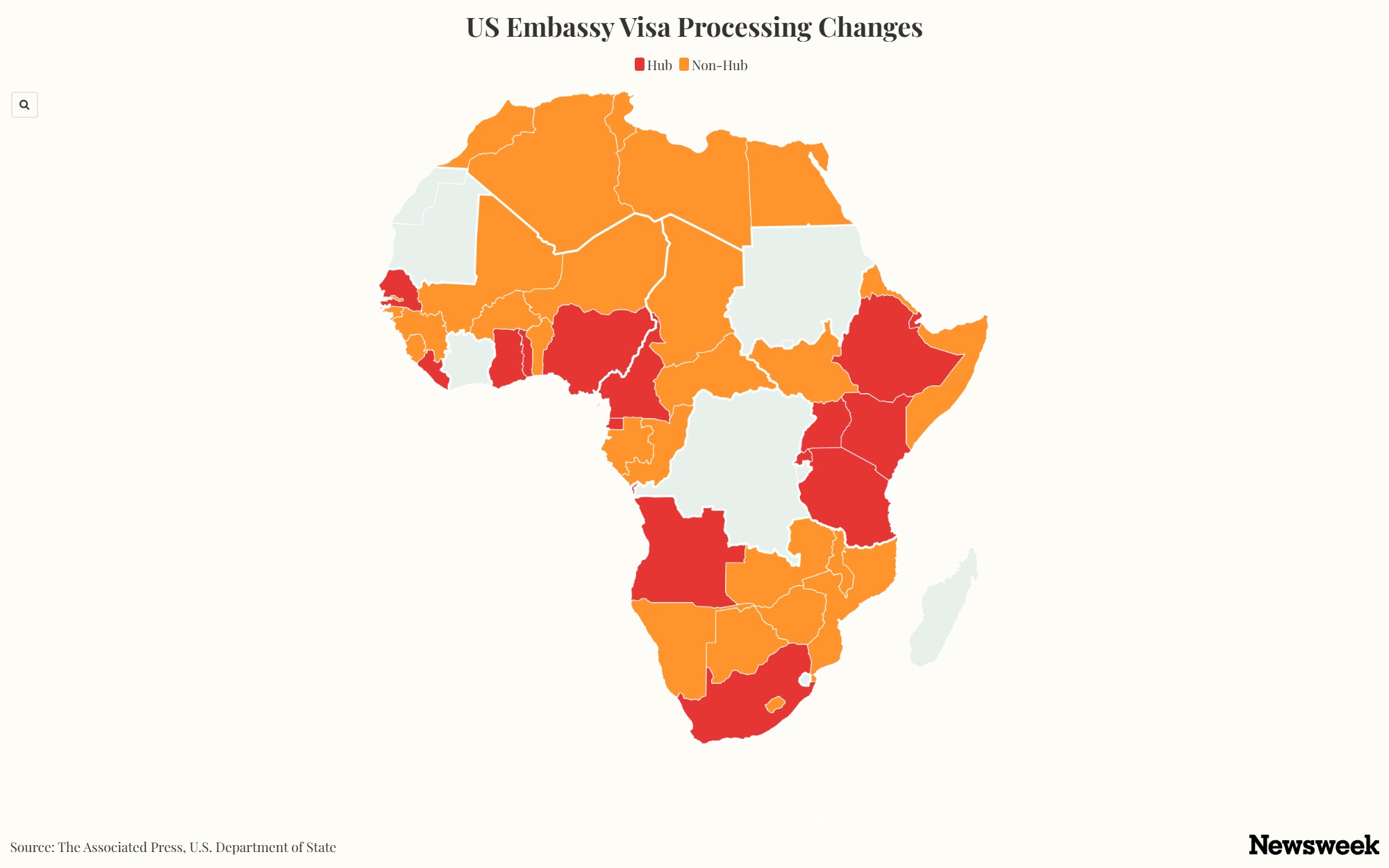
We must look past the bureaucratic language of "efficiency." When visa operations are centralized into a few hubs across the continent, the barrier to entry shifts from merit to geography. For many, this means the inability to complete interviews within their own borders, requiring costly travel to neighboring nations.
The scale of this shift is significant: the almost 50 U.S. embassies and consulates currently processing visa applications across the continent will be reduced to 20 in the coming weeks. While there is not yet a set date for the change, it is expected to take effect in June, according to U.S. officials and internal memos.
When a policy that looks efficient on paper creates a financial burden that separates the talented from the opportunities they have spent years preparing for, we have to ask: Efficiency for whom?
Stay Connected
Contact
African Diaspora Youth Hub
Fiscally Sponsored by Ghana Diaspora Public Affairs Collective (GHPAC)
1629 K ST NW SUITE 300WASHINGTON DC 20006
© 2025. All rights reserved.