
The Currency of A Name
Dr. Yetunde A. Omede moves through the world with dual vision — shaped by Nigerian excellence and sharpened by American opportunity. Born and raised in New Jersey, USA, she has built everything she touches from the place where both meet, and she has never wasted either one. Growing up in a Nigerian household, she learned early that your name is the only thing that truly belongs to you. Dr. Omede grew up understanding this not as pressure, but as a blueprint.
6/26/20266 min read
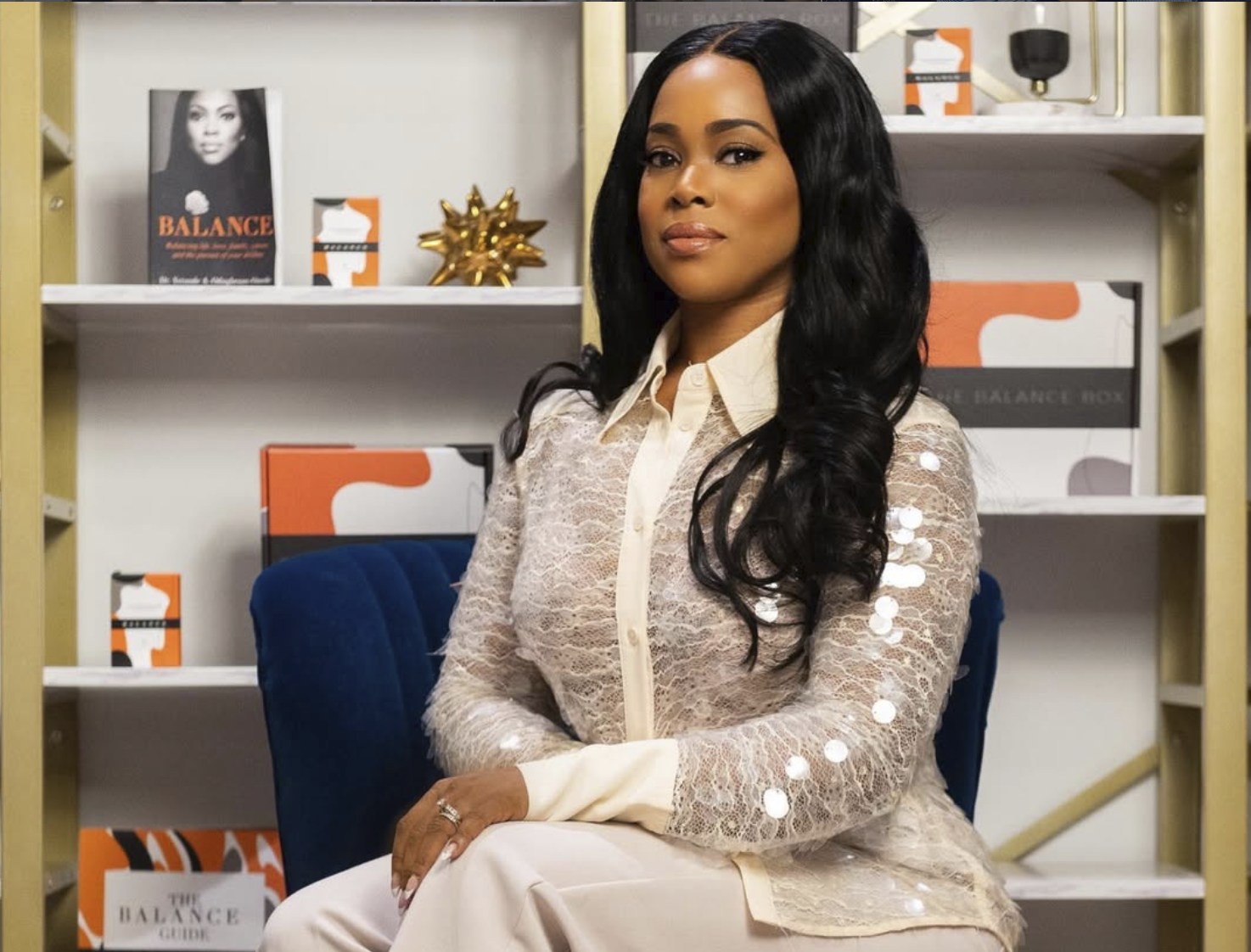
Dr. Yetunde A. Omede moves through the world with dual vision — shaped by Nigerian excellence and sharpened by American opportunity. Born and raised in New Jersey, USA, she has built everything she touches from the place where both meet, and she has never wasted either one.
Growing up in a Nigerian household, she learned early that your name is the only thing that truly belongs to you. You take it into every room you enter. You carry it out when you leave. It can open doors or close them, depending entirely on how you protect it. Dr. Omede grew up understanding this not as pressure, but as a blueprint.
Two Worlds, One Standard
She is Nigerian-American, born and raised in New Jersey, USA, and she will tell you plainly that growing up between two cultures never pulled her in opposite directions. It gave her twice as much to draw from. “What I’ve been intentional about,” she says, “is blending both cultures and taking the very best out of each.”
From her Nigerian upbringing, she took a standard of excellence — not ambition as a mood or a performance, but as a baseline expectation in every room, every role, every responsibility. “In every position I’ve ever had, whether volunteer or professional, I always reminded myself: whatever you do, just be the best at it.” She also carried with her something she heard often growing up: your education is something no one can ever take from you. Work ethic, she will tell you quickly, was never something she needed to borrow from anywhere. She came with that already.
From America, she took the belief in merit and opportunity — the idea that showing up fully, building a strong reputation, and protecting your name could take you places. “When you blend those two frameworks together — Nigerian excellence and American opportunity — you create something powerful.” For Dr. Omede, that blend has not been a theory. It has been a practice, tested across decades of professional life.
“Your name and your reputation are your most important currency. People will forget your title long before they forget how you made them feel, or the quality of work you put forward.”
The Muscle of Decisive Thinking
Ask her about the turning point — the single moment that set everything in motion — and she will gently push back on the question. There was no one moment, she says. What there was, instead, was a series of deliberate decisions that built on each other: studying journalism and media, pursuing a PhD in global affairs, choosing to work not only in academia but in practitioner spaces, including the United Nations. Each decision informed the next.
“Most of those decisions didn’t feel like risks in the moment. They felt like necessities.” She describes decision-making the way a trainer describes building physical strength — you develop it in the small, low-stakes moments so that when the weight increases, you are already ready. “It starts small. Who you spend your time with. What direction you choose to move in. What you’re willing to walk away from.”
She describes herself as someone with a risk management mindset, but one who has learned not to let that translate into hesitation. “I let risk inform me. I don’t let it stop me. There’s a big difference.” That distinction has carried her from a New Jersey upbringing to leading civic engagement at a state university and bringing real-world global experience into the classroom.
To Navigate the Intersection
Dr. Omede speaks honestly about what it means to be a Black woman in professional spaces. It is rarely about navigating a single barrier, she says. It is about showing up at the intersection of race and gender at the same time, and sometimes without being able to name clearly which one is working against you in a given moment.
“There are times when you look around and see colleagues being elevated — people whose qualifications don’t exceed yours — and the opportunity still doesn’t come your way. And you’re left asking yourself: is it the race? Is it the gender? The answer is often that it can be both.” She does not say this with bitterness. She says it the way someone states a fact — clearly, without drama, and without the intention of dwelling there.
What she decided, early in her career, was that naming the dynamic would never mean being paralyzed by it. She sees it. She acknowledges it. And she moves anyway, anchored in something she has watched prove itself true: representation yields returns.
“When institutions fill their leadership with only one type of person, they are actively doing themselves a disservice. When we are given the seat, we don’t just fill it — we expand it.”
The women with the qualifications exist. The Black women with the vision, the experience, and the capacity to lead exist. “We exist,” she says. “And when we are given the seat, we don’t just fill it — we expand it.” She has been at those tables. She has watched the room adjust. She has decided that the adjusting is not her concern. The showing up is.
The Value Crisis Inside the Institution
Universities, she will tell you, are among the most important institutions we have. Their reason for existing is profound — to build a literate, capable, and thoughtful population that can move every sector of society forward. What she has observed is not a failure of the institution itself, but a forgetting of that purpose. And the value crisis, as she sees it, is what happens when the public loses sight of why universities exist — and stops holding them to the standard of that purpose.
The same fracture runs through global governance. Governments are not, at their core, administrative structures — their deepest obligation is the wellbeing of the people they serve. When that obligation becomes secondary to everything else, the institution loses its reason for existing.
She does not describe this with despair. She describes it with the focused energy of someone who has already identified the problem and is actively working toward solutions — through building new programs, through mentorship, through writing, through forging partnerships across sectors. “Impact does not live in a single place. And neither do I.”
What She Would Tell Her Younger Self
She does not hesitate when this question comes. The answer is ready.
“Everything works out for your good.” She says it simply, without sentiment — not as reassurance, but as something she has lived long enough to know is true. The closed doors that once felt like failures were, she now understands, redirections. Each disappointment was moving her away from something that was never the right fit, and positioning her closer to where she was actually meant to be.
“Not every closed door is a loss. And not every opportunity that presents itself is actually meant for you. Learning to discern the difference is one of the most important skills you can develop.” The earlier you accept that, she says, the lighter the journey becomes.
“Trust the process completely. Trust it when it is clear and trust it when it is not. Because looking back, even the detours made sense.”
The Room Keeps Growing
To the young person trying to find their footing and wondering whether there is real space for them — Dr. Omede’s advice is practical and direct. Start building your network early, and understand that it already exists around you: your family, your community, your teachers, your professors. Ask questions. Send the email, even to the stranger. “You never know where a simple hello can take you.” Learn to communicate your ideas clearly. And know yourself well enough, early enough, that you don’t spend years living out someone else’s definition of who you should be.
“Be curious. Be confident. And trust what you carry. That is more than enough to begin.”
The legacy she is building is not a monument, and it is not limited to one community. She is a globalist who believes, without reservation, that the next generation of leaders will need to be drawn from every part of this world — not just the familiar rooms, not just the expected places. Every young person, from every background, every country, every lived experience, has something this world needs. “We cannot afford to leave any of them behind.”
She says it, too, as a mother. Her deepest personal hope is that her children go further than she did — not only in their careers, but in their understanding that their lives are part of something larger than themselves, and that social responsibility is not a burden but a natural extension of who they are.
The programs she builds, the students she mentors, the partnerships she forges, the values she pours into her children: all of it aimed in the same direction.
Her name was always the blueprint. In Yoruba, Yetunde means ‘mother has returned’ — wisdom and legacy coming back through a new generation. Dr. Yetunde Odugbesan-Omede has lived that meaning fully. The room keeps growing because she understood, early and deeply, that a name is only as valuable as what you build with it. And she has built something that will outlast every title she has ever held.
Stay Connected
Contact
African Diaspora Youth Hub
Fiscally Sponsored by Ghana Diaspora Public Affairs Collective (GHPAC)
1629 K ST NW SUITE 300WASHINGTON DC 20006
© 2025. All rights reserved.