
Mamdani’s 100 Days: Why His Focus on the Everyday Resonates with the African Diaspora
I watched Zohran Mamdani’s 100-day address expecting nothing dramatic, only honesty and a clear sense of what had actually been accomplished so far. What I found was a speech that kept returning to one profound theme: everyday life.
Adeife Adeyeye
4/20/20263 min read
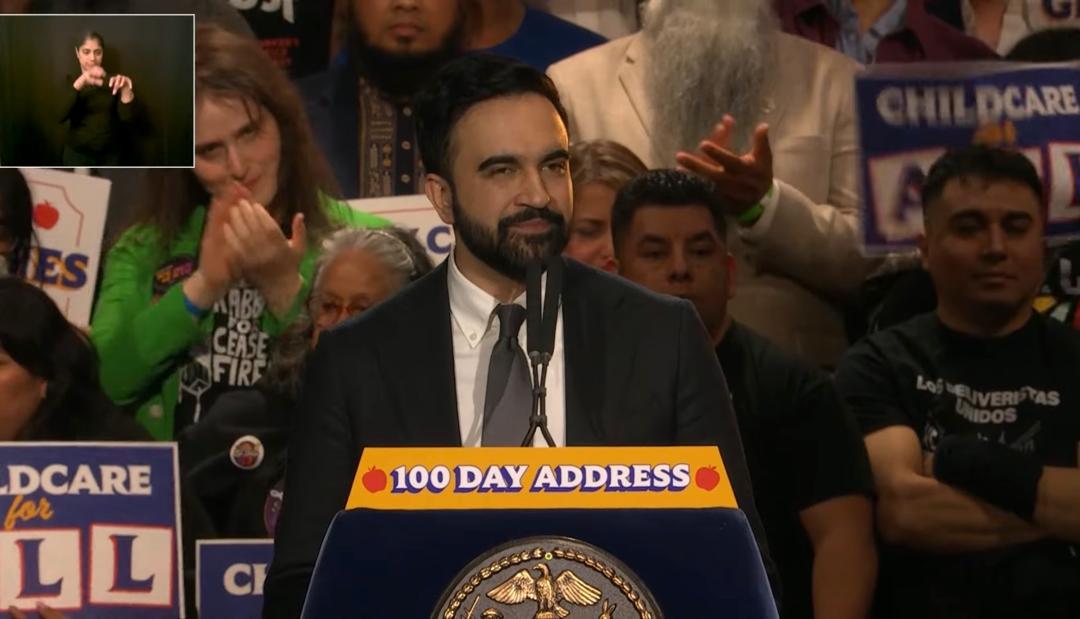
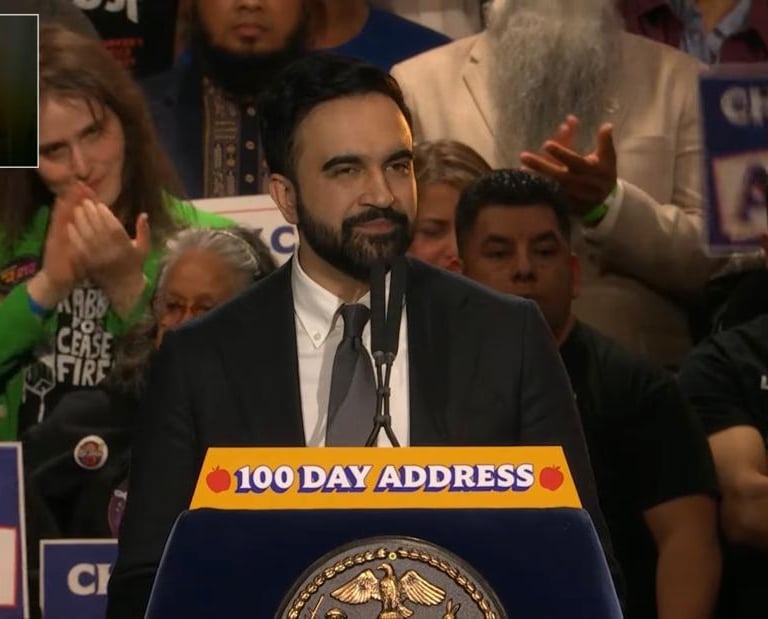
I watched Zohran Mamdani’s 100-day address expecting nothing dramatic, only honesty and a clear sense of what had actually been accomplished so far. What I found was a speech that kept returning to one profound theme: everyday life.
He Started with People, Not Policies
Before delving into policy, Mamdani thanked the city workers, labor leaders, organizers, faith leaders, and activists. That immediately set a grounded tone. It didn’t feel like a leader trying to perform; it felt like someone acknowledging the core infrastructure of the community—the people who truly make things work.
He shared a powerful metric that framed the entire speech: “If you can’t trust someone to solve the smallest issues of your life, why would you trust them to solve the biggest ones?” Everything he mentioned after that was an attempt to answer this essential question.
The Basics, Actively Happening
Mamdani provided concrete examples of localized improvements, such as filling over 100,000 potholes, improving sanitation and waste systems, and rolling out new “empire bins” in areas like Harlem. He also detailed efforts to remove unnecessary fees that quietly make life more expensive. This work is not flashy, but it is the kind of tangible progress people feel in their daily routines, which is what made it stand out.
Childcare: From Family Burden to Public Priority
One central theme was the persistent focus on childcare. It was clearly not treated as a side issue, but a critical, central priority. He spoke about universal childcare, including plans for free services for two-year-olds, and even standing in the snow with workers discussing delivery strategies.
This focus struck me deeply. From my vantage point, childcare is rarely treated as a public responsibility. Instead, it is predominantly handled within families, often by women, and mostly without systemic structure. Hearing it positioned as something that public systems should actively support made me pause and reflect.
Money Directed at Real Life
Mamdani also secured significant funding, including about $1.8 million directed toward fast food and retail workers and a $50 million investment in parks. These are not abstract figures; they are decisions directly tied to how people live, work, and move through the city.
Public Safety, Framed Differently
Regarding public safety, he asserted, “Our approach to public safety is working. Since we took office, murders have hit record lows.” He also spoke about creating a New York Office of Community Safety. Regardless of political agreement, he is clearly attempting to shift the conversation beyond policing alone, toward a more comprehensive, community-focused approach.
Clear About Who He Is
He didn’t try to soften or blur his political stance, stating clearly: “I was elected as a democratic socialist and I will govern as a democratic socialist.” That level of clarity is respectable, even for those who may disagree with his ideology.
Watching This as an African Youth
As I watched, I found myself thinking about leadership back home. It often manifests as grand promises, lengthy speeches, and abstract ideas that fail to translate to daily life. Here, the focus kept returning to a simpler, more powerful question: Is life actually getting better for people, not just in theory, but in practice?
There was a quieter layer to my attention. Knowing that he has African roots didn't change my listening, but it heightened my awareness. It made me pay closer attention to how leadership is expressed, and what it could come to represent beyond the confines of one city.
Not Everyone Is Convinced
This caveat matters. Some people feel 100 days is too early to judge, that the impact is still limited, and that deeper issues require deeper solutions. And that is a fair assessment. After all, 100 days is only an initial phase, not a final verdict.
Closing Reflection
Mamdani concluded by saying: “Our best days lie before us, New York… the work is there to be done. Together, let’s go after it and get it.” It was the right way to close—less a triumph, more the deliberate start of something enduring.
For me, the speech left a simple thought: maybe leadership isn’t always about massive, sudden change. Maybe it’s also about the quiet, persistent work that allows people to slowly start trusting the small things again.
Source: https://www.youtube.com/live/XNSAQ78KdFY?si=BN2SKopH6fuSQvrY
Stay Connected
Contact
African Diaspora Youth Hub
Fiscally Sponsored by Ghana Diaspora Public Affairs Collective (GHPAC)
1629 K ST NW SUITE 300WASHINGTON DC 20006
© 2025. All rights reserved.