
Beyond Remittances: Unlocking the Full Potential of Africa's Diaspora
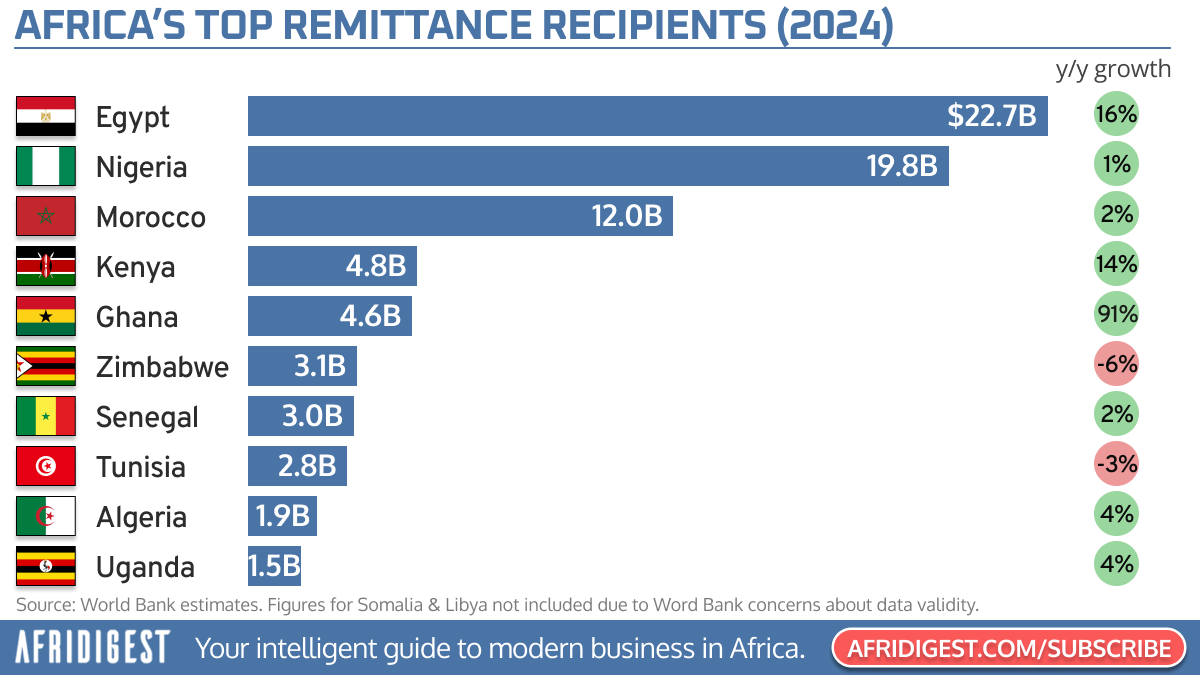
For decades, Africa’s relationship with its diaspora has been measured primarily in dollars. Every year, billions of dollars flow back into African economies through remittances, helping families pay school fees, cover healthcare costs, sustain small businesses, and weather economic hardship. These financial contributions are indispensable, and for many households, they are nothing short of life-changing. But what if they have also become the narrowest way to define the diaspora's value? That question deserves renewed attention.
Adeife Adeyeye
7/3/20263 min read


For Africa, the world’s youngest continent, the challenge is no longer simply attracting financial resources. It is building economies capable of creating opportunities for the millions of young people entering the labor market each year. This requires innovation, skills, investment, collaboration, and institutions that connect talent across borders.
In other words, it requires a new vision for diaspora engagement.
Instead of viewing the diaspora as a financial safety net, governments should begin treating it as a strategic development partner.
That means making it easier for diaspora entrepreneurs to invest without unnecessary bureaucracy. It means creating structured mentorship programmes that connect experienced professionals abroad with young innovators at home. It means encouraging research partnerships, technology transfer, venture capital, and cross-border business collaboration. Above all, it means recognising that the diaspora's greatest contribution may not always come through a bank transfer.
The encouraging news is that this conversation is already beginning. IOM has increasingly emphasised that diaspora communities contribute far more than remittances. Their expertise, professional networks, entrepreneurial capacity, and investment potential are essential to building resilient economies and advancing sustainable development. For young Africans, this matters profoundly.
The future of the continent will not be shaped solely by those who remain at home or those who build lives abroad. It will be shaped by how effectively both groups work together.
Africa's relationship with its diaspora should not be defined by distance, but by partnership.
Remittances will always remain important. They strengthen families and communities in ways that statistics can never fully capture.
But they should never become the ceiling of our ambition.
Africa's diaspora is more than the money it sends home. It is a global community of innovators, entrepreneurs, researchers, professionals, and change-makers whose greatest contribution may not be what arrives in a bank account, but what returns through ideas, partnerships, investment, and opportunity.
The real challenge is no longer persuading the diaspora to contribute.
It is building policies that recognise their full value.
Until that happens, Africa will continue measuring one of its greatest strategic assets far too narrowly.
Sources
International Organization for Migration (IOM) – IOM and COMESA Advance Diaspora Investment Agenda to Unlock Trade Corridor Opportunities in Eastern and Southern Africa
International Organization for Migration (IOM) – Remittances and Diaspora Investment https://www.iom.int/remittances-and-diaspora-investment
Xinhua – IOM Urges Diaspora Investment to Spur Africa's Trade Corridors
https://english.news.cn/20260623/ebf4b3e3c9f44ab595c995b688f03734/c.html
For decades, Africa’s relationship with its diaspora has been measured primarily in dollars.
Every year, billions of dollars flow back into African economies through remittances, helping families pay school fees, cover healthcare costs, sustain small businesses, and weather economic hardship. These financial contributions are indispensable, and for many households, they are nothing short of life-changing.
But what if they have also become the narrowest way to define the diaspora's value?
That question deserves renewed attention.
Last week, policymakers, regional institutions, and development partners gathered in Mombasa, Kenya, for a workshop convened by the International Organization for Migration (IOM) and the Common Market for Eastern and Southern Africa (COMESA). Their message was clear: Africa must move beyond seeing its diaspora solely as a source of remittances and instead create policies that unlock diaspora investment, entrepreneurship, knowledge exchange, and regional trade.
This shift in thinking is long overdue.
Across the world, Africans are leading research teams, building successful companies, managing multinational organizations, developing cutting-edge technologies, and influencing public policy. Every day, they acquire knowledge, professional networks, and practical experience that could help address some of Africa’s most pressing development challenges.
Yet when discussions turn to the diaspora's contribution, the conversation too often begins and ends with one question:
How much money are they sending home?
That question matters, but it is no longer enough.
Imagine a software engineer in Canada mentoring young developers in Nairobi. A Ghanaian entrepreneur in London investing in startups in Accra. A Nigerian artificial intelligence researcher collaborating with universities in Lagos. A Kenyan doctor providing virtual training to healthcare professionals across East Africa.
These contributions may never appear in remittance statistics, yet their long-term impact could be far greater than a single financial transfer.
Stay Connected
Contact
African Diaspora Youth Hub
Fiscally Sponsored by Ghana Diaspora Public Affairs Collective (GHPAC)
1629 K ST NW SUITE 300WASHINGTON DC 20006
© 2025. All rights reserved.